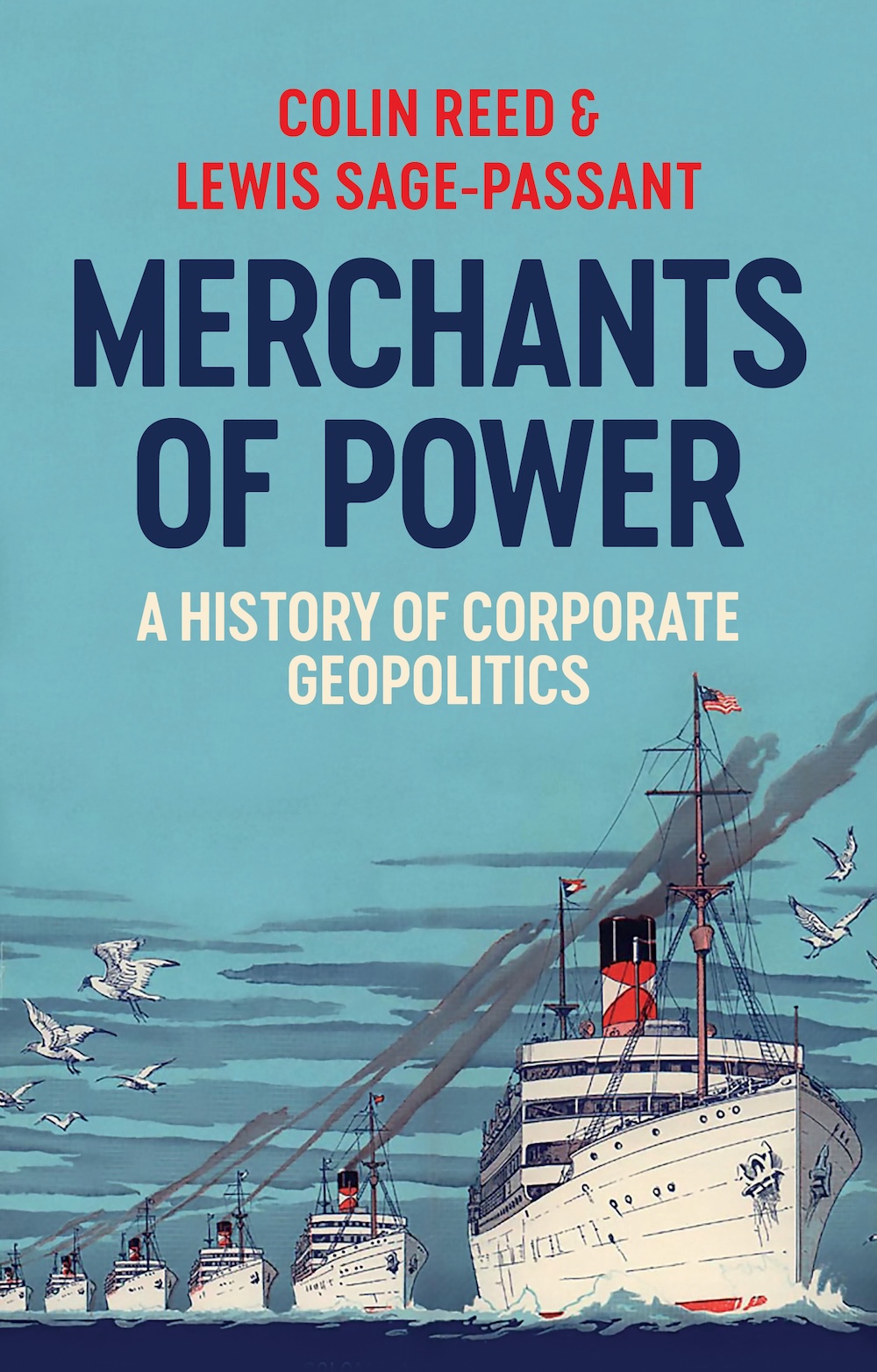
Merchants of Power
The History of Corporate Geopolitics
How businesses have shaped global affairs, from the Renaissance to the present.
Description
Corporations can outlive empires, accumulate more wealth than nations and project power with more persistence than armies. Kings and continents have bent to their will, and wars and coups have been launched at their command.
Yet despite this legacy, corporations have been largely overlooked as geopolitical players, and modern companies seem lost as they navigate a global order that closely resembles the imperial great power politics of the past. Colin Reed and Lewis Sage-Passant puncture this state-centric view, offering a holistic account that captures the many actors influencing the global system. From the diplomatic alliances of the Hanseatic League to the commercial intelligence networks of Venice; from the sprawling armies of the East India Companies to the Cold War coups of the United Fruit Company; and from the country-shaping monopolies of the Japanese Zaibatsu to the satellites of Starlink, corporations have routinely and profoundly shaped geopolitical history. As frontier technologies like artificial intelligence rapidly transform national industries and economies, the private companies spearheading innovation often wield more financial, political and even military clout on the world stage than states.
Merchants of Power asks vital questions about the role corporations play in today’s tumultuous world order.
Table of contents
Introduction
Chapter 1: Merchants with an eye for a deal, a sharp sword, and a ruthless nature – The Prehistory of Corporate Geopolitics
Chapter 2: Commerce with Sword in Hand – The Age of Heroic Commerce
Chapter 3: Death-or-glory adventures in return for high profits – Gunboat Commerce in the Early Industrial Age
Chapter 4: Fit for no Dominion – Corporate Fiefdoms in the Late Industrial Age
Chapter 5: To See Them Cut Down by Our Rifles – The Corporation at War
Chapter 6: Carving up the World – The Corporate Cold War
Chapter 7: We Weren’t Thinking About Geopolitics at all – Corporations at the End of History
Chapter 8: Into “Unprecedented” Times: Historical Lessons for Modern Corporations
Notes
Bibliography
Index
Author(s)

Colin Reed is Chief Intelligence Officer at Clock&Cloud. A former US intelligence analyst, his writing has appeared in the Financial Times and International Politics.

Lewis Sage-Passant PhD is Global Head of Intelligence at at a major pharmaceuticals company. Formerly a British Army intelligence officer, he is an adjunct professor at Sciences Po, Paris.
FAQs
Frequently Asked Questions
What is "Merchants of Power" about?
Corporations can outlive empires, accumulate more wealth than nations and project power with more persistence than armies. Kings and continents have bent to their will, and wars and coups have been launched at their command.
Yet despite this legacy, corporations have been largely overlooked as geopolitical players, and modern companies seem lost as they navigate a global order that closely resembles the imperial great power politics of the past. Colin Reed and Lewis Sage-Passant puncture this state-centric view, offering a holistic account that captures the many actors influencing the global system. From the diplomatic alliances of the Hanseatic League to the commercial intelligence networks of Venice; from the sprawling armies of the East India Companies to the Cold War coups of the United Fruit Company; and from the country-shaping monopolies of the Japanese Zaibatsu to the satellites of Starlink, corporations have routinely and profoundly shaped geopolitical history. As frontier technologies like artificial intelligence rapidly transform national industries and economies, the private companies spearheading innovation often wield more financial, political and even military clout on the world stage than states.
Merchants of Power asks vital questions about the role corporations play in today’s tumultuous world order.
Who wrote "Merchants of Power"?
"Merchants of Power" was written by Colin Reed and Lewis Sage-Passant.
Colin Reed is Chief Intelligence Officer at Clock&Cloud. A former US intelligence analyst, his writing has appeared in the Financial Times and International Politics.
Lewis Sage-Passant PhD is Global Head of Intelligence at at a major pharmaceuticals company. Formerly a British Army intelligence officer, he is an adjunct professor at Sciences Po, Paris.
What is the Table of Contents for "Merchants of Power"?
Introduction
Chapter 1: Merchants with an eye for a deal, a sharp sword, and a ruthless nature - The Prehistory of Corporate Geopolitics
Chapter 2: Commerce with Sword in Hand - The Age of Heroic Commerce
Chapter 3: Death-or-glory adventures in return for high profits - Gunboat Commerce in the Early Industrial Age
Chapter 4: Fit for no Dominion - Corporate Fiefdoms in the Late Industrial Age
Chapter 5: To See Them Cut Down by Our Rifles - The Corporation at War
Chapter 6: Carving up the World – The Corporate Cold War
Chapter 7: We Weren’t Thinking About Geopolitics at all – Corporations at the End of History
Chapter 8: Into “Unprecedented” Times: Historical Lessons for Modern Corporations
Notes
Bibliography
Index
Related books