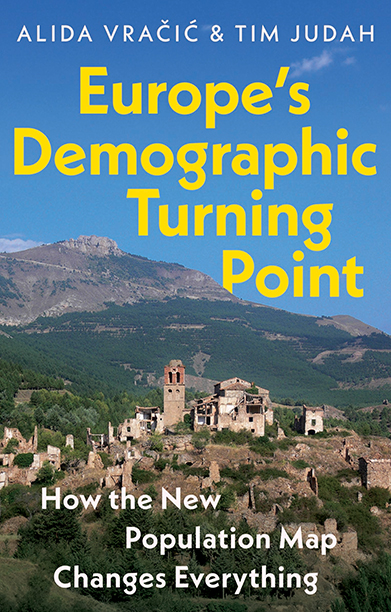
Europe’s Demographic Turning Point
How the New Population Map Changes Everything
Demography is the new climate change
Description
For decades, experts, policymakers, activists and politicians have been concerned with climate change. Now it is clear that demographic change is just as important.
Every few days, a statistical office in Europe releases data confirming that, in the last year, fewer babies were born than ever and that the average age of their compatriots is getting ever older. More of us can and do work longer, but the increase in the amount of people aged eighty or more is leading to unprecedented numbers impacted by conditions like dementia and needing expensive care. As fertility rates decline, the population of many European countries is shrinking fast. But some are growing, thanks to immigration. Immigrants bolster declining populations and fill jobs in countries crying out for labour—but then they too get old and will need care. Against this backdrop, migration has become the single most combustible issue in European politics.
What does all this mean for Europe’s future? What are the implications for migration, pensions, climate change, security and defence? How do automation and artificial intelligence fit into this story? This timely book offers a vital analysis of the discomfiting realities of one of the greatest challenges facing Europe today.
Author(s)

Alida Vračić is a Vienna-based social scientist and lawyer whose work focuses on demography, migration and social change across South-east Europe, the Western Balkans and Central Asia. She has been affiliated with the Institute for Human Sciences (Vienna), the European Council on Foreign Relations and the German Marshall Fund. She has published widely on demographic change and its impact across Europe.
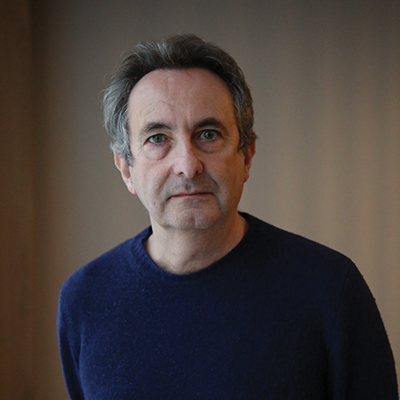
Tim Judah is a journalist and author who covers the Balkans, Ukraine and other regions for The Economist. He has also reported from the frontline of the wars in Afghanistan and Ukraine for The New York Review of Books. His books include Life and Fate: All You Need to Know About the Changing Demography of Central, Eastern and South-eastern Europe (Institute for Human Sciences, 2025); In Wartime: Stories from Ukraine (Allen Lane, 2015); and Kosovo: War and Revenge (Yale University Press, 2002).
FAQs
Frequently Asked Questions
What is "Europe’s Demographic Turning Point" about?
For decades, experts, policymakers, activists and politicians have been concerned with climate change. Now it is clear that demographic change is just as important.
Every few days, a statistical office in Europe releases data confirming that, in the last year, fewer babies were born than ever and that the average age of their compatriots is getting ever older. More of us can and do work longer, but the increase in the amount of people aged eighty or more is leading to unprecedented numbers impacted by conditions like dementia and needing expensive care. As fertility rates decline, the population of many European countries is shrinking fast. But some are growing, thanks to immigration. Immigrants bolster declining populations and fill jobs in countries crying out for labour—but then they too get old and will need care. Against this backdrop, migration has become the single most combustible issue in European politics.
What does all this mean for Europe’s future? What are the implications for migration, pensions, climate change, security and defence? How do automation and artificial intelligence fit into this story? This timely book offers a vital analysis of the discomfiting realities of one of the greatest challenges facing Europe today.
Who wrote "Europe’s Demographic Turning Point"?
"Europe’s Demographic Turning Point" was written by Alida Vračić and Tim Judah.
Alida Vračić is a Vienna-based social scientist and lawyer whose work focuses on demography, migration and social change across South-east Europe, the Western Balkans and Central Asia. She has been affiliated with the Institute for Human Sciences (Vienna), the European Council on Foreign Relations and the German Marshall Fund. She has published widely on demographic change and its impact across Europe.
Tim Judah is a journalist and author who covers the Balkans, Ukraine and other regions for The Economist. He has also reported from the frontline of the wars in Afghanistan and Ukraine for The New York Review of Books. His books include Life and Fate: All You Need to Know About the Changing Demography of Central, Eastern and South-eastern Europe (Institute for Human Sciences, 2025); In Wartime: Stories from Ukraine (Allen Lane, 2015); and Kosovo: War and Revenge (Yale University Press, 2002).
Related books