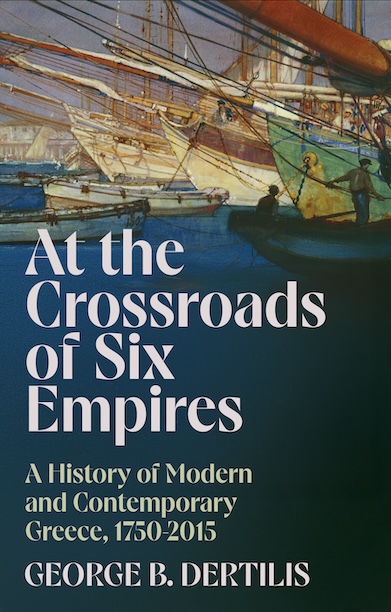
At the Crossroads of Six Empires
A History of Modern and Contemporary Greece, 1750–2015
A definitive history of modern Greece, now available in English for the first time.
Foreword by Katerina Sakellaropoulou, former president of Greece.
Translated by Jacob Moe
Description
In this capstone achievement of a lifetime’s scholarship, George B. Dertilis traces the making of modern Greece, from the last years of Ottoman rule and the Revolution of 1821 to the debt crisis of the 2010s.
Rather than simply narrating events, Dertilis asks why they happened: how an improvised, often poor state won the consent of its citizens; absorbed war, occupation, civil conflict and mass displacement; and was in turn resisted, reinvented and remade by them. He moves between the great forces of society and economy and the accounts of the resilient individuals that shaped and were shaped by them, distilling it all into a single coherent synthesis. Drawing on decades of archival research, this is total history in the fullest sense—as attentive to ideas, mentalities and politics as to economics and material life.
Written with clarity for specialist and general readers alike, and closing with an unflinching reckoning with Greece’s recent crisis, this is a masterwork five decades in the making.
Table of contents
Preface by Katerina Sakellaropoulou, former President of Greece
Translator’s foreword, Jacob Moe
Introduction
Acknowledgements
Note on translation
List of tables
List of charts
Map
Part I: Diaspora and Shipping: Ignoring Frontiers and Defying States, 1750–2000
Chapter 1: An Interpretation
Chapter 2: Shipping in Greece and the Diaspora: Comparisons and Convergences, 1830–2002
Chapter 3: Shipping, the Economy, the State: Interpretative Ramifications
Part II Greek Societies before Independence: The Initial Conditions, 1750–1830
Chapter 1: Nature and Social Distribution of Natural Resources
Chapter 2 : Social Environment and Power Relations
Part III Ex Nihilo: The Economy of a Nascent State, 1821–1863
Chapter 1 : A Debt-Ridden Newborn State
Chapter 2: The Debt to Europe: The Loans of 1825 and 1832
Chapter 3: The State, Social Forces and Landholding
Chapter 4: National State, National Bank
Chapter 5: Land of Cultivators, Shepherds and Bandits
Chapter 6: The Population: Starvation, Famine, Adaptations
Part IV: Nationalism, the Greek State and the Eastern Question, 1833–1881
Chapter 1: Tracing the Roots of Greek Nationalism
Chapter 2: Nationalism and the War of Independence
Chapter 3: Nationalism and the Eastern Question, 1830–1863
Chapter 4: Nationalism and the Eastern Question, 1864–1881
Part V: Foundations: State, Society, Economy, 1830–1890
Chapter 1: A State ex Nihilo
Chapter 2: The Economy and the Countryside
Chapter 3: Social Classes: Relations of Power, Hierarchies, Social Mobilities
Chapter 4: Cities, Modernity, Industrialization: European Cultural Transfers
Part VI : Foundations: The State, the Diaspora Investors and the Power Complex, 1866–1906
Chapter 1: Lavrion: A Historical Example
Chapter 2: Lavrion, the Political Crisis and the Power Game, 1872–1873
Chapter 3: Lavrion and the Stock Market Crash in 1874: A Matter of Politics
Chapter 4: Investing in Greek Loans: A Global Perspective
Chapter 5: Portents of an Inescapable Default, 1879–1893
Chapter 6: Debt, Default and Recovery: The Actors
Chapter 7: Power and Markets: The State and the Magnates
Part VII: A Protracted and Deficient Industrialization, 1860–2015
Chapter 1: An Industrial Revolution That Never Happened
Part VIII: Reforms: Statecraft, Politics and Social Classes
Chapter 1: Reforms in the New Parliamentary Regime
Chapter 2: Tax Reform, 1840–1955
Chapter 3: State Cornucopia and Social Classes, 1830–2000
Part IX : Wars, Triumphs and Catastrophes, 1897–1922
Chapter 1: Debacle and Counter-Attack, 1897–1913
Chapter 2: The Coup d’État of 1909
Chapter 3: The Pronunciamento and Rule of the Military League
Chapter 4: The Rise of Eleftherios Venizelos
Chapter 5: The Decade of the Wars, 1912–1922
Part X Seven Wars, Four Civil Wars, Seven Defaults, 1821–2012
Chapter 1: An Overview
Chapter 2: A First Period of Wars and Defaults, 1821–1879
Chapter 3: Three Questions about Military Expenditure
Chapter 4: A Second Period of Wars and Defaults, 1880–1912
Chapter 5: World War I and the Third Civil War
Chapter 6: From Triumph to Ruin, 1919–1922
Chapter 7: A Third and Fourth Period of Wars and Defaults, 1900–1940
Chapter 8: The Greek Interwar, 1923–1940: Threats from the Left, Reactions from the Right
Chapter 9: From Asia Minor to World War II, 1923–1940
Part XI From World War and Civil War to the Great Crisis, 1940–2020
Chapter 1: World War, Occupation, Resistance, Civil War, 1940–1950
Chapter 2: The Cold War in Greece and Cyprus, 1947–1961
Chapter 3: An Unstable Reconstruction, 1953–1961
Chapter 4: Political Crisis, the Colonels’ Coup and Dictatorship, 1965–1974
Chapter 5: Civil War Culture: The Roots of the Great Crisis
Chapter 6: Fifth Period of Wars, 1940–2012: A Prelude to the Last Default
Chapter 7: Wars and Civil Wars: The Cain Syndrome
Chapter 8: The Civil War Mindset and the Crisis of 2009–2015
Chapter 9: Towards and through the Great Crisis, 1974–2002 to 2009–2020
Addendum The Years of the Great Crisis and the Aftermath, 2008–2020
Chronology
Endnotes
Bibliography
Index
Author(s)

George B. Dertilis (1939–2023) was one of the leading historians of modern and contemporary Greece. The author of twelve books and forty articles, he studied in Greece and the United Kingdom before becoming a professor of Social and Economic History at the University of Athens. He founded that university’s Historical Archive, and in 2000 was elected a Full Professor (Directeur d’études) at EHESS in Paris.
FAQs
Frequently Asked Questions
What is "At the Crossroads of Six Empires" about?
In this capstone achievement of a lifetime’s scholarship, George B. Dertilis traces the making of modern Greece, from the last years of Ottoman rule and the Revolution of 1821 to the debt crisis of the 2010s.
Rather than simply narrating events, Dertilis asks why they happened: how an improvised, often poor state won the consent of its citizens; absorbed war, occupation, civil conflict and mass displacement; and was in turn resisted, reinvented and remade by them. He moves between the great forces of society and economy and the accounts of the resilient individuals that shaped and were shaped by them, distilling it all into a single coherent synthesis. Drawing on decades of archival research, this is total history in the fullest sense—as attentive to ideas, mentalities and politics as to economics and material life.
Written with clarity for specialist and general readers alike, and closing with an unflinching reckoning with Greece’s recent crisis, this is a masterwork five decades in the making.
Who wrote "At the Crossroads of Six Empires"?
"At the Crossroads of Six Empires" was written by George B. Dertilis.
George B. Dertilis (1939–2023) was one of the leading historians of modern and contemporary Greece. The author of twelve books and forty articles, he studied in Greece and the United Kingdom before becoming a professor of Social and Economic History at the University of Athens. He founded that university’s Historical Archive, and in 2000 was elected a Full Professor (Directeur d’études) at EHESS in Paris.
What is the Table of Contents for "At the Crossroads of Six Empires"?
Preface by Katerina Sakellaropoulou, former President of Greece
Translator’s foreword, Jacob Moe
Introduction
Acknowledgements
Note on translation
List of tables
List of charts
Map
Part I: Diaspora and Shipping: Ignoring Frontiers and Defying States, 1750–2000
Chapter 1: An Interpretation
Chapter 2: Shipping in Greece and the Diaspora: Comparisons and Convergences, 1830–2002
Chapter 3: Shipping, the Economy, the State: Interpretative Ramifications
Part II Greek Societies before Independence: The Initial Conditions, 1750–1830
Chapter 1: Nature and Social Distribution of Natural Resources
Chapter 2 : Social Environment and Power Relations
Part III Ex Nihilo: The Economy of a Nascent State, 1821–1863
Chapter 1 : A Debt-Ridden Newborn State
Chapter 2: The Debt to Europe: The Loans of 1825 and 1832
Chapter 3: The State, Social Forces and Landholding
Chapter 4: National State, National Bank
Chapter 5: Land of Cultivators, Shepherds and Bandits
Chapter 6: The Population: Starvation, Famine, Adaptations
Part IV: Nationalism, the Greek State and the Eastern Question, 1833–1881
Chapter 1: Tracing the Roots of Greek Nationalism
Chapter 2: Nationalism and the War of Independence
Chapter 3: Nationalism and the Eastern Question, 1830–1863
Chapter 4: Nationalism and the Eastern Question, 1864–1881
Part V: Foundations: State, Society, Economy, 1830–1890
Chapter 1: A State ex Nihilo
Chapter 2: The Economy and the Countryside
Chapter 3: Social Classes: Relations of Power, Hierarchies, Social Mobilities
Chapter 4: Cities, Modernity, Industrialization: European Cultural Transfers
Part VI : Foundations: The State, the Diaspora Investors and the Power Complex, 1866–1906
Chapter 1: Lavrion: A Historical Example
Chapter 2: Lavrion, the Political Crisis and the Power Game, 1872–1873
Chapter 3: Lavrion and the Stock Market Crash in 1874: A Matter of Politics
Chapter 4: Investing in Greek Loans: A Global Perspective
Chapter 5: Portents of an Inescapable Default, 1879–1893
Chapter 6: Debt, Default and Recovery: The Actors
Chapter 7: Power and Markets: The State and the Magnates
Part VII: A Protracted and Deficient Industrialization, 1860–2015
Chapter 1: An Industrial Revolution That Never Happened
Part VIII: Reforms: Statecraft, Politics and Social Classes
Chapter 1: Reforms in the New Parliamentary Regime
Chapter 2: Tax Reform, 1840–1955
Chapter 3: State Cornucopia and Social Classes, 1830–2000
Part IX : Wars, Triumphs and Catastrophes, 1897–1922
Chapter 1: Debacle and Counter-Attack, 1897–1913
Chapter 2: The Coup d’État of 1909
Chapter 3: The Pronunciamento and Rule of the Military League
Chapter 4: The Rise of Eleftherios Venizelos
Chapter 5: The Decade of the Wars, 1912–1922
Part X Seven Wars, Four Civil Wars, Seven Defaults, 1821–2012
Chapter 1: An Overview
Chapter 2: A First Period of Wars and Defaults, 1821–1879
Chapter 3: Three Questions about Military Expenditure
Chapter 4: A Second Period of Wars and Defaults, 1880–1912
Chapter 5: World War I and the Third Civil War
Chapter 6: From Triumph to Ruin, 1919–1922
Chapter 7: A Third and Fourth Period of Wars and Defaults, 1900–1940
Chapter 8: The Greek Interwar, 1923–1940: Threats from the Left, Reactions from the Right
Chapter 9: From Asia Minor to World War II, 1923–1940
Part XI From World War and Civil War to the Great Crisis, 1940–2020
Chapter 1: World War, Occupation, Resistance, Civil War, 1940–1950
Chapter 2: The Cold War in Greece and Cyprus, 1947–1961
Chapter 3: An Unstable Reconstruction, 1953–1961
Chapter 4: Political Crisis, the Colonels’ Coup and Dictatorship, 1965–1974
Chapter 5: Civil War Culture: The Roots of the Great Crisis
Chapter 6: Fifth Period of Wars, 1940–2012: A Prelude to the Last Default
Chapter 7: Wars and Civil Wars: The Cain Syndrome
Chapter 8: The Civil War Mindset and the Crisis of 2009–2015
Chapter 9: Towards and through the Great Crisis, 1974–2002 to 2009–2020
Addendum The Years of the Great Crisis and the Aftermath, 2008–2020
Chronology
Endnotes
Bibliography
Index
Related books