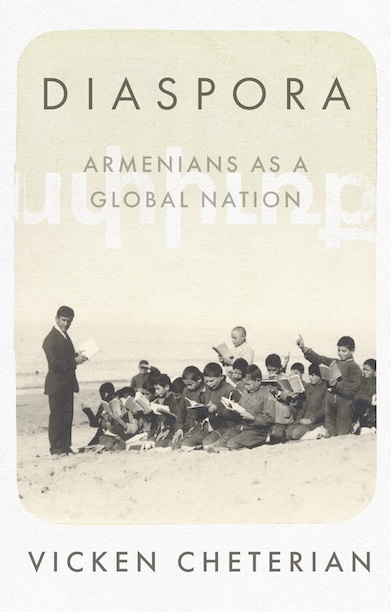
Diaspora
Armenians as a Global Nation
The fascinating story of Armenia’s centuries-old global diaspora. Can it survive and flourish in an age of nation states?
Description
What is the impact on a dispersed community living among dozens of countries when a nation state emerges carrying its name? And what happens when a nation that resided in the Middle East for millennia suddenly, within a short century, moves to Western countries?
For centuries, the Armenian diaspora was an engine of creativity and progress, not only for Armenians, but also for the societies in which they lived. Yet the emergence of an independent Armenian state in 1991 led to pessimism, with some arguing that Armenian identity can only be preserved in the Republic, while those living elsewhere would be doomed to assimilate and disappear. Despite persistent calls by political and religious leaders for Armenians to move to the ‘homeland’, today, three times more Armenians live outside it than within it. Exploring contemporary theories and revisiting Armenian history as a story of dispersal, Vicken Cheterian shows how Armenians possessed a globalised network of traders, bankers and intellectuals well before the age of globalisation. Can that still be an advantage today?
This compelling account celebrates the flexibility, hybridity and multiculturalism of diasporic identity against the rigid and centralising logic of nation states.
Author(s)

Vicken Cheterian is a lecturer in History and International Relations at the University of Geneva, and the Director of the think tank Diasporan Perspectives—The Gulbenkian Initiative on Armenian Issues. He is the author of Diaspora: Armenians as a Global Nation and Open Wounds: Armenians, Turks, and a Century of Genocide (both published by Hurst).
FAQs
Frequently Asked Questions
What is "Diaspora" about?
What is the impact on a dispersed community living among dozens of countries when a nation state emerges carrying its name? And what happens when a nation that resided in the Middle East for millennia suddenly, within a short century, moves to Western countries?
For centuries, the Armenian diaspora was an engine of creativity and progress, not only for Armenians, but also for the societies in which they lived. Yet the emergence of an independent Armenian state in 1991 led to pessimism, with some arguing that Armenian identity can only be preserved in the Republic, while those living elsewhere would be doomed to assimilate and disappear. Despite persistent calls by political and religious leaders for Armenians to move to the ‘homeland’, today, three times more Armenians live outside it than within it. Exploring contemporary theories and revisiting Armenian history as a story of dispersal, Vicken Cheterian shows how Armenians possessed a globalised network of traders, bankers and intellectuals well before the age of globalisation. Can that still be an advantage today?
This compelling account celebrates the flexibility, hybridity and multiculturalism of diasporic identity against the rigid and centralising logic of nation states.
Who wrote "Diaspora"?
"Diaspora" was written by Vicken Cheterian.
Vicken Cheterian is a lecturer in History and International Relations at the University of Geneva, and the Director of the think tank Diasporan Perspectives—The Gulbenkian Initiative on Armenian Issues. He is the author of Diaspora: Armenians as a Global Nation and Open Wounds: Armenians, Turks, and a Century of Genocide (both published by Hurst).
Related books


