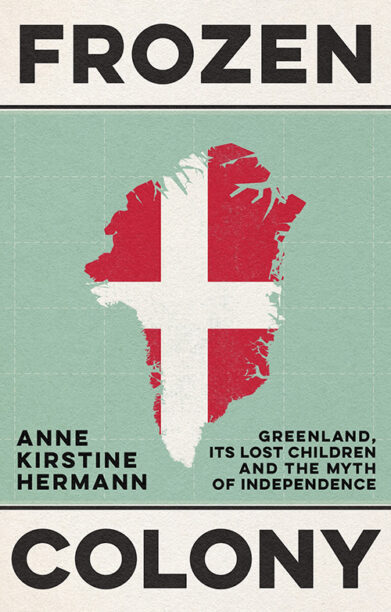
Frozen Colony
Greenland, Its Lost Children and the Myth of Independence
Uncovers the dark truth behind Denmark’s exploitation of Greenland, its oppression of Inuit identity and its attempts to thwart global calls for self-determination.
Description
As Donald Trump threatens to ‘take’ Greenland, the vast island occupies the public spotlight like never before. Much has been written about who might claim its future—but little about the colonial history that still shapes its present.
Anne Kirstine Hermann reveals the untold story of Denmark’s successful campaign to retain its last colony. With the United Nations demanding self-determination after World War Two, Greenland was officially decolonised in 1954. But instead of granting full independence, Denmark convinced the international community that the island was a natural Danish possession and incorporated it as a Danish province. While Greenland was hailed as a model territory and Denmark a humane coloniser, Copenhagen implemented numerous programmes to refashion Greenland in its own image, suppressing indigenous language and culture and uprooting communities. Inuit children became pawns in this operation, coerced into Danish-language boarding schools or forcibly adopted by Danish parents. So-called decolonisation became one of the most oppressive chapters in the island’s history.
Through extensive archival research and the vivid recollections of Greenlanders, Hermann documents the hidden human cost of Greenland’s unfinished decolonisation.
Table of contents
Prologue: Kaassaassuk the Orphan
Chapter 1: A clandestine matter, 1952
Chapter 2: The Danish Dilemma, 1946-1947
Chapter 3: The Last Colony, 1947-1948
Chapter 4: A Civilising Mission, 1948–1950
Chapter 5: Victory in Geneva, 1950–1951
Chapter 6: The Great Re-education, 1950–1952
Chapter 7: An important asset, 1951–1952
Chapter 8: The Concentration Policy, 1952
Chapter 9: Strictly Confidential, 1952
Chapter 10: A County of Denmark, 1953
Chapter 11: Not Inuit, 1954
Notes
Bibliography
Index
Author(s)

Anne Kirstine Hermann PhD is a journalist and anthropologist. The Danish edition of this book was supported by the Kim Wall Memorial Grant; was named Historical Book of the Year in Denmark; and won the Danish Ethnographic Society’s Communication Award. She is a radio host for the Danish Broadcasting Corporation.
FAQs
Frequently Asked Questions
What is "Frozen Colony" about?
As Donald Trump threatens to ‘take’ Greenland, the vast island occupies the public spotlight like never before. Much has been written about who might claim its future—but little about the colonial history that still shapes its present.
Anne Kirstine Hermann reveals the untold story of Denmark’s successful campaign to retain its last colony. With the United Nations demanding self-determination after World War Two, Greenland was officially decolonised in 1954. But instead of granting full independence, Denmark convinced the international community that the island was a natural Danish possession and incorporated it as a Danish province. While Greenland was hailed as a model territory and Denmark a humane coloniser, Copenhagen implemented numerous programmes to refashion Greenland in its own image, suppressing indigenous language and culture and uprooting communities. Inuit children became pawns in this operation, coerced into Danish-language boarding schools or forcibly adopted by Danish parents. So-called decolonisation became one of the most oppressive chapters in the island’s history.
Through extensive archival research and the vivid recollections of Greenlanders, Hermann documents the hidden human cost of Greenland’s unfinished decolonisation.
Who wrote "Frozen Colony"?
"Frozen Colony" was written by Anne Kirstine Hermann.
Anne Kirstine Hermann PhD is a journalist and anthropologist. The Danish edition of this book was supported by the Kim Wall Memorial Grant; was named Historical Book of the Year in Denmark; and won the Danish Ethnographic Society’s Communication Award. She is a radio host for the Danish Broadcasting Corporation.
What is the Table of Contents for "Frozen Colony"?
Prologue: Kaassaassuk the Orphan
Chapter 1: A clandestine matter, 1952
Chapter 2: The Danish Dilemma, 1946-1947
Chapter 3: The Last Colony, 1947-1948
Chapter 4: A Civilising Mission, 1948–1950
Chapter 5: Victory in Geneva, 1950–1951
Chapter 6: The Great Re-education, 1950–1952
Chapter 7: An important asset, 1951–1952
Chapter 8: The Concentration Policy, 1952
Chapter 9: Strictly Confidential, 1952
Chapter 10: A County of Denmark, 1953
Chapter 11: Not Inuit, 1954
Notes
Bibliography
Index
Related books