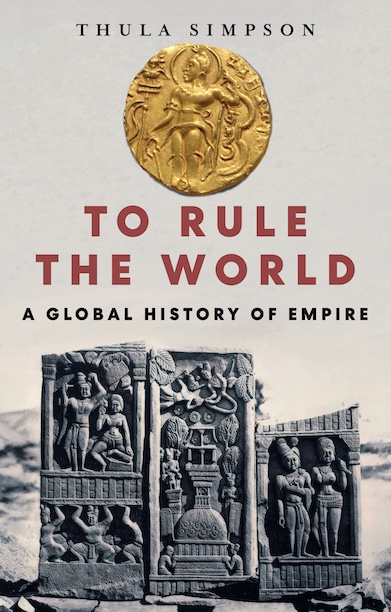
To Rule the World
A Global History of Empire
A fascinating study of competing empires as the engines of world history, offering fresh insights into today’s geopolitical crises.
Description
Did the Age of Empire ever truly end? While the late twentieth century promised a world beyond conquest and hegemony, the evidence of the twenty-first century suggests otherwise.
In this sweeping history, spanning the earliest human societies to contemporary struggles for global power, Thula Simpson traces the rise and fall of empires across time and space. From the British, Spanish, Ottoman, American, Russian and Chinese world orders to the Mongol khanates, Timur’s conquests, Napoleon’s imperium and regional powers such as the Aztecs, Ashanti, Zulus and modern Israel, he explores the diverse forms empire has taken—and why even the most formidable systems of power ultimately faded. Moving beyond conventional materialist explanations, Simpson argues that power has never depended on technological superiority alone. Again and again, weaker forces have overturned formidable opponents by weaponising ideas. Empires are built not only through military and economic strength but through their ability to shape how people understand the world.
This is a bold reinterpretation of world history that reveals enduring patterns in political struggle and human ambition. By uncovering the principles through which mastery of the Earth has been won and lost, Simpson offers a compelling guide to understanding our own turbulent age.
Table of contents
Prologue
Chapter 1. God Kings
Chapter 2. Civilisations
Chapter 3. Annals
Chapter 4. Barbarians
Chapter 5. Caliphate
Chapter 6. Warlords
Chapter 7. Crusaders
Chapter 8. World Conquerors
Chapter 9. Discovery
Chapter 10. Heretics
Chapter 11. Titans
Chapter 12. Ipsit Dixit
Chapter 13. Patriots
Chapter 14. Nations
Chapter 15. Frontiers
Chapter 16. The Great Games
Chapter 17. Inferno
Chapter 18. Interwar
Chapter 19. Armageddon
Chapter 20. Decolonisation
Chapter 21. Ipsit Dixit
Chapter 22. Pax Americana
Chapter 23. The Forever Wars
Conclusion
Notes
Bibliography
Index
Author(s)

Thula Simpson is Professor of History at the University of Toronto. His work explores power, war, liberation movements and state formation in Africa and the wider world. He is the author of several books, including To Rule the World: A Global History of Empire and the acclaimed History of South Africa: 1902 to the Present (both published by Hurst). He writes on the global histories of empire, ideology, conflict and political change.
FAQs
Frequently Asked Questions
What is "To Rule the World" about?
Did the Age of Empire ever truly end? While the late twentieth century promised a world beyond conquest and hegemony, the evidence of the twenty-first century suggests otherwise.
In this sweeping history, spanning the earliest human societies to contemporary struggles for global power, Thula Simpson traces the rise and fall of empires across time and space. From the British, Spanish, Ottoman, American, Russian and Chinese world orders to the Mongol khanates, Timur’s conquests, Napoleon’s imperium and regional powers such as the Aztecs, Ashanti, Zulus and modern Israel, he explores the diverse forms empire has taken—and why even the most formidable systems of power ultimately faded. Moving beyond conventional materialist explanations, Simpson argues that power has never depended on technological superiority alone. Again and again, weaker forces have overturned formidable opponents by weaponising ideas. Empires are built not only through military and economic strength but through their ability to shape how people understand the world.
This is a bold reinterpretation of world history that reveals enduring patterns in political struggle and human ambition. By uncovering the principles through which mastery of the Earth has been won and lost, Simpson offers a compelling guide to understanding our own turbulent age.
Who wrote "To Rule the World"?
"To Rule the World" was written by Thula Simpson.
Thula Simpson is Professor of History at the University of Toronto. His work explores power, war, liberation movements and state formation in Africa and the wider world. He is the author of several books, including To Rule the World: A Global History of Empire and the acclaimed History of South Africa: 1902 to the Present (both published by Hurst). He writes on the global histories of empire, ideology, conflict and political change.
What is the Table of Contents for "To Rule the World"?
Prologue
Chapter 1. God Kings
Chapter 2. Civilisations
Chapter 3. Annals
Chapter 4. Barbarians
Chapter 5. Caliphate
Chapter 6. Warlords
Chapter 7. Crusaders
Chapter 8. World Conquerors
Chapter 9. Discovery
Chapter 10. Heretics
Chapter 11. Titans
Chapter 12. Ipsit Dixit
Chapter 13. Patriots
Chapter 14. Nations
Chapter 15. Frontiers
Chapter 16. The Great Games
Chapter 17. Inferno
Chapter 18. Interwar
Chapter 19. Armageddon
Chapter 20. Decolonisation
Chapter 21. Ipsit Dixit
Chapter 22. Pax Americana
Chapter 23. The Forever Wars
Conclusion
Notes
Bibliography
Index
Related books