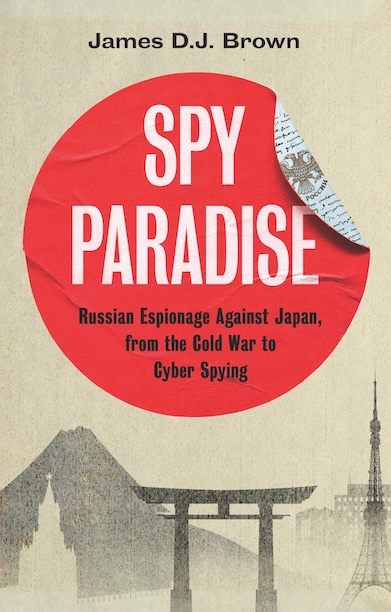
Spy Paradise
Russian Espionage Against Japan, from the Cold War to Cyber Spying
From Cold War agents to cyber warfare, discover why Japan has proved such a paradise for Russian spies—and why it matters today.
Description
Post-war Japan offered Moscow’s spies an extraordinary range of opportunities: US military bases to surveil, a wealth of science and technology to steal, and politicians, officials and businessmen willing to betray their country for a price. With no comprehensive anti-espionage law in Japan, Moscow’s intelligence officers operated with remarkable freedom.
Spy Paradise is the untold story of Moscow’s espionage against Japan, from the Soviet declaration of war in 1945 to Russia’s recruitment of agents in Japanese tech firms in the 2020s. Among its revelations are an attempt to foment socialist revolution by subjecting tens of thousands of Japanese prisoners to ideological indoctrination; a Soviet ‘illegal’ who spent three decades spying on Japan while posing as an ordinary Japanese citizen; and the alleged recruitment of a Japanese cabinet minister and a top executive at one of Japan’s leading trading firms. The book also examines how traditional espionage has evolved into cyber-attacks and disinformation, including suspected efforts to influence Japan’s 2025 election.
But this is more than a history of spies and secrets. It investigates why Japan has proved so vulnerable to foreign intelligence operations—and what it can do to ensure that it is no longer a paradise for Russian agents.
Table of contents
-
Introduction
Chapter 1: The Red Repatriates
Chapter 2: Rastvorov Reveals All
Chapter 3: The Rebuild
Chapter 4: Treasure Trove
Chapter 5: “A very mysterious gentleman”
Chapter 6: A “Huge, Idiotic, Decaying Empire”
Chapter 7: Plus ça change…
Chapter 8: Cyber Espionage and Information Operations
Notes
Bibliography
Index
Author(s)

James D.J. Brown is Professor of Political Science at Temple University, Japan, specialising in East Asian politics. A regular media contributor, he is the author of Cracking the Crab: Russian Espionage Against Japan, from Peter the Great to Richard Sorge and Spy Paradise: Russian Espionage Against Japan, from the Cold War to Cyber Spying (both published by Hurst). He is also the author of Japan, Russia and their Territorial Dispute (Routledge, 2016) and co-editor of Japan’s Foreign Relations in Asia (Routledge, 2018) and The Abe Legacy (Lexington Books, 2021).
FAQs
Frequently Asked Questions
What is "Spy Paradise" about?
Post-war Japan offered Moscow’s spies an extraordinary range of opportunities: US military bases to surveil, a wealth of science and technology to steal, and politicians, officials and businessmen willing to betray their country for a price. With no comprehensive anti-espionage law in Japan, Moscow’s intelligence officers operated with remarkable freedom.
Spy Paradise is the untold story of Moscow’s espionage against Japan, from the Soviet declaration of war in 1945 to Russia’s recruitment of agents in Japanese tech firms in the 2020s. Among its revelations are an attempt to foment socialist revolution by subjecting tens of thousands of Japanese prisoners to ideological indoctrination; a Soviet ‘illegal’ who spent three decades spying on Japan while posing as an ordinary Japanese citizen; and the alleged recruitment of a Japanese cabinet minister and a top executive at one of Japan’s leading trading firms. The book also examines how traditional espionage has evolved into cyber-attacks and disinformation, including suspected efforts to influence Japan’s 2025 election.
But this is more than a history of spies and secrets. It investigates why Japan has proved so vulnerable to foreign intelligence operations—and what it can do to ensure that it is no longer a paradise for Russian agents.
Who wrote "Spy Paradise"?
"Spy Paradise" was written by James D.J. Brown.
James D.J. Brown is Professor of Political Science at Temple University, Japan, specialising in East Asian politics. A regular media contributor, he is the author of Cracking the Crab: Russian Espionage Against Japan, from Peter the Great to Richard Sorge and Spy Paradise: Russian Espionage Against Japan, from the Cold War to Cyber Spying (both published by Hurst). He is also the author of Japan, Russia and their Territorial Dispute (Routledge, 2016) and co-editor of Japan’s Foreign Relations in Asia (Routledge, 2018) and The Abe Legacy (Lexington Books, 2021).
What is the Table of Contents for "Spy Paradise"?
-
Introduction Chapter 1: The Red Repatriates Chapter 2: Rastvorov Reveals All Chapter 3: The Rebuild Chapter 4: Treasure Trove Chapter 5: “A very mysterious gentleman” Chapter 6: A “Huge, Idiotic, Decaying Empire” Chapter 7: Plus ça change… Chapter 8: Cyber Espionage and Information Operations Notes Bibliography Index
Related books