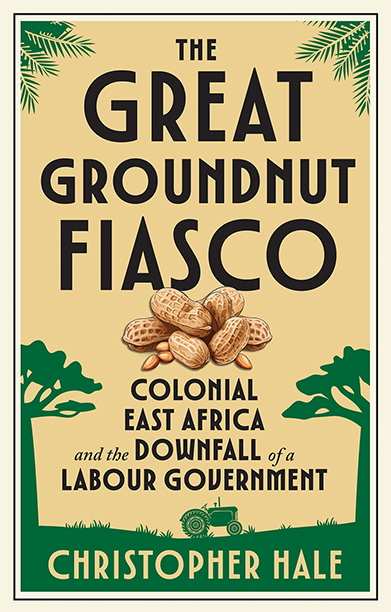
The Great Groundnut Fiasco
Colonial East Africa and the Downfall of a Labour Government
The compelling story of a Labour government’s efforts to feed post-war Britain by exploiting its African colonies—and the corporate mismanagement that saw the Scheme collapse.
Description
Britain in 1946 was bruised, broke and disillusioned. Although the war was over, food and edible oils were still scarce. The recently elected Labour government had yet to deliver the prosperous, egalitarian society it had promised. Desperate to restore morale, it devised an audacious plan: the East African Groundnut Scheme.
Thousands of volunteers would clear Yorkshire-sized tracts of Tanganyikan bush to grow oil-rich groundnuts. Labour championed this crusade messianically, convinced British ingenuity could transform its colonies into agricultural powerhouses. Despite massive investment, the Scheme collapsed spectacularly, doomed by inadequate research and disregard for local knowledge. Conservatives and Fleet Street buried it in ridicule—‘groundnuts’ became a byword for left-wing incompetence, and the debacle helped sink Labour in the 1951 election. But was it truly a government blunder?
Christopher Hale tells a more complex story. A Unilever subsidiary had sold the Scheme to fraught ministers, then catastrophically mismanaged operations. The real scandal wasn’t socialist bungling—it was the betrayal of a nation’s hopes by a corporate behemoth.
Table of contents
The Cast
A Simple Chronology
Prelude
Introduction
1. The Battle for the Peace
2. Imperial Interests
3. ‘The Land Was Lush and Green’
4. Mission to Africa
5. The Making of the Minister
6. ‘Develop the Empire and Grow More Fat’
7. Mustering the Groundnut Army
8. The Battle of the Bundu
9. A Mirror for England
10. Into the Southern Province
11. The Great Handover
12. The PR Man Cometh
13. ‘Almost in Ruins’
14. Recrimination and Revolt
15. Not with a Bang but a Whimper
Conclusion: An Affair to Forget
Appendix: The Main Parliamentary Debates on theEast African Groundnut Scheme, 1948–1951
Acknowledgements
Notes
Bibliography
Index
Reviews
‘Christopher Hale’s exploration of this key moment in Britain’s post-war relationship with Africa is long overdue. In excruciating detail and magnificent prose, he captures how a scheme to feed a British public emaciated by wartime rationing while developing Tanzania collapsed in ignominy. A masterpiece.’ — Martin Plaut, former BBC Africa editor, and author of Unbroken Chains: A 5,000-Year History of African Enslavement
‘An incisive and cautionary tale of what happened in East Africa when British imperial self-interest and commercial greed—underwritten by government, leavened with a dose of altruism—were combined with the astonishingly profound ignorance of other people and places.’ — Alan Lester, editor of The Truth About Empire: Real Histories of British Colonialism
‘An extraordinary tale, well told by Christopher Hale. Everyone should know about the Groundnut Scheme, a fiasco rich in lessons for our own times. Commercial greed, political hubris and practical incompetence all played starring roles in this great development disaster.’ — Nicholas Westcott, author of Imperialism and Development: The East African Groundnut Scheme and its Legacy
Author(s)

Christopher Hale is a documentary producer and the author of five non-fiction books. Educated at the Universities of Sussex and Edinburgh, he has made documentaries for broadcasters including the BBC, Channel 4 and National Geographic. His books have focused on the Holocaust, post-colonialism and the ideologies of the Third Reich.
FAQs
Frequently Asked Questions
What is "The Great Groundnut Fiasco" about?
Britain in 1946 was bruised, broke and disillusioned. Although the war was over, food and edible oils were still scarce. The recently elected Labour government had yet to deliver the prosperous, egalitarian society it had promised. Desperate to restore morale, it devised an audacious plan: the East African Groundnut Scheme.
Thousands of volunteers would clear Yorkshire-sized tracts of Tanganyikan bush to grow oil-rich groundnuts. Labour championed this crusade messianically, convinced British ingenuity could transform its colonies into agricultural powerhouses. Despite massive investment, the Scheme collapsed spectacularly, doomed by inadequate research and disregard for local knowledge. Conservatives and Fleet Street buried it in ridicule—‘groundnuts’ became a byword for left-wing incompetence, and the debacle helped sink Labour in the 1951 election. But was it truly a government blunder?
Christopher Hale tells a more complex story. A Unilever subsidiary had sold the Scheme to fraught ministers, then catastrophically mismanaged operations. The real scandal wasn’t socialist bungling—it was the betrayal of a nation’s hopes by a corporate behemoth.
Who wrote "The Great Groundnut Fiasco"?
"The Great Groundnut Fiasco" was written by Christopher Hale.
Christopher Hale is a documentary producer and the author of five non-fiction books. Educated at the Universities of Sussex and Edinburgh, he has made documentaries for broadcasters including the BBC, Channel 4 and National Geographic. His books have focused on the Holocaust, post-colonialism and the ideologies of the Third Reich.
What is the Table of Contents for "The Great Groundnut Fiasco"?
The Cast
A Simple Chronology
Prelude
Introduction
1. The Battle for the Peace
2. Imperial Interests
3. ‘The Land Was Lush and Green’
4. Mission to Africa
5. The Making of the Minister
6. ‘Develop the Empire and Grow More Fat’
7. Mustering the Groundnut Army
8. The Battle of the Bundu
9. A Mirror for England
10. Into the Southern Province
11. The Great Handover
12. The PR Man Cometh
13. ‘Almost in Ruins’
14. Recrimination and Revolt
15. Not with a Bang but a Whimper
Conclusion: An Affair to Forget
Appendix: The Main Parliamentary Debates on theEast African Groundnut Scheme, 1948–1951
Acknowledgements
Notes
Bibliography
Index
Related books